
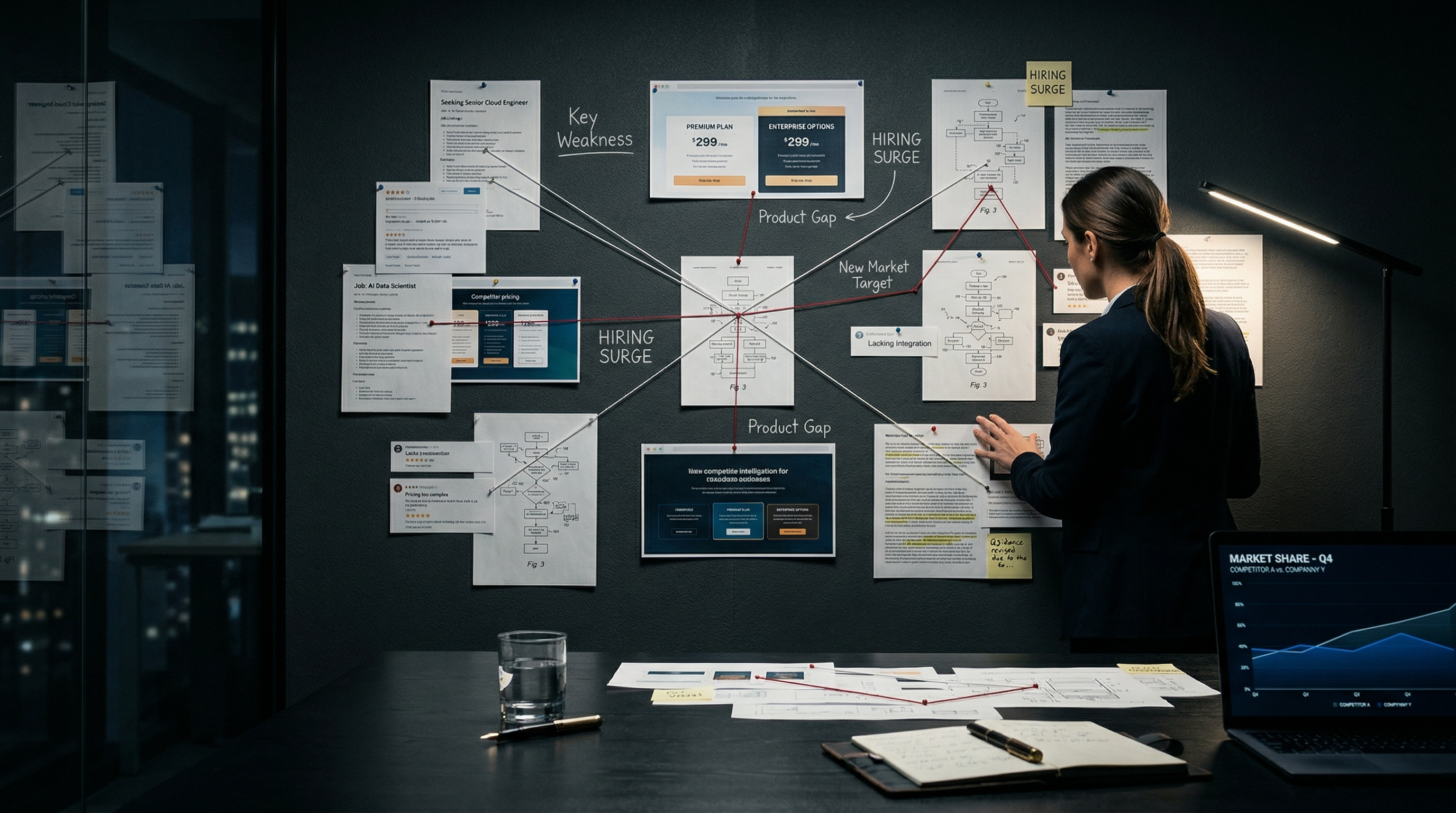
Competitive Intelligence Without the Spyware Budget: A Practical Guide
How to legally gather actionable competitive intelligence using public sources, systematic research, and the right frameworks—no corporate espionage required.
In 2019, Netflix noticed something odd in their data. A small streaming service was acquiring customers at 3x the industry rate. Instead of dismissing it, Netflix ran competitive analysis. They discovered the competitor had built a recommendation engine that reduced decision fatigue. Eighteen months later, Netflix rolled out their own "Play Something" feature. That competitor? It was an early version of what would become TikTok's algorithmic feed.
This is competitive intelligence done right: systematic, legal, and focused on actionable insights. You don't need corporate espionage, private investigators, or gray-market data brokers. You need discipline, the right sources, and frameworks for connecting dots.
What Competitive Intelligence Actually Means
Competitive intelligence (CI) is the systematic collection and analysis of publicly available information about competitors, markets, and industry trends. It's not corporate espionage. It's not hacking. It's not stealing trade secrets.
The Society of Competitive Intelligence Professionals (SCIP) defines it as "the legal and ethical collection and analysis of information regarding the capabilities, vulnerabilities, and intentions of business competitors." The key words are legal and ethical.
Good CI answers specific business questions:
- Why are we losing deals to Competitor X?
- What's driving their pricing strategy?
- Which features are they prioritizing next quarter?
- Where are they vulnerable that we're not exploiting?
Bad CI is vague market research that sits in a deck nobody reads. Good CI changes decisions. If you want the AI-assisted version of that workflow, AI Competitor Analysis shows how to turn those same public signals into a structured report you can challenge before acting.
The Intelligence Sources Everyone Ignores
Most companies do competitive analysis backward. They start with Google, read a few blog posts, and call it research. Here's what actually works:
1. Job Postings (The Roadmap in Plain Sight)
Job postings are the most underutilized intelligence source. Companies can't build products without hiring for them first.
What to look for:
- Technical roles by location: A fintech company hiring blockchain engineers in Singapore suggests expansion into APAC crypto markets
- Senior leadership gaps: A new VP of Partnerships signals a channel strategy shift
- Unusual skill combinations: A role requiring "LLM fine-tuning" + "healthcare compliance" reveals an AI health product
Case study: In 2023, analysts noticed OpenAI hiring robotics engineers with "physical world interaction" experience. Four months later, they announced their robotics partnership with Figure AI. The signals were public for anyone watching.
2. Customer Reviews (Unfiltered Vulnerability Reports)
Your competitors' angry customers are your best prospects. Reviews on G2, Capterra, TrustRadius, Gartner Peer Insights, and even Reddit contain unfiltered complaints about real problems.
How to analyze reviews systematically:
- Collect 50-100 recent reviews across platforms
- Categorize complaints by theme (pricing, support, features, reliability)
- Look for patterns: if 40% mention "slow support response," that's a messaging opportunity
- Track sentiment trends over time
Real example: A B2B SaaS company discovered through review analysis that their biggest competitor's customers were furious about mandatory annual contracts. They launched a month-to-month option and ran targeted ads featuring review quotes. Conversion rates increased 34%.
3. Content Analysis (Where Executives Leak Strategy)
Executives can't resist talking about their vision. Conference talks, podcast appearances, blog posts, and LinkedIn activity contain strategic signals most people miss.
The content intelligence framework:
- Count frequency: Which topics does their CEO mention most? That's their narrative priority
- Track evolution: How has their messaging changed quarter over quarter?
- Watch for pivots: New buzzwords signal strategic shifts before products launch
- Monitor hiring content: "We're hiring 50 engineers" reveals scale and focus areas
Pattern to watch: When a CEO starts using a competitor's terminology, they're playing defense. When they invent new language, they're setting the agenda.
4. Patent Filings (The 18-Month Time Machine)
Patent applications publish 18 months after filing. That's a window into what competitors were planning a year and a half ago—and what might still be coming.
How to search patents effectively:
- Use Google Patents or USPTO search
- Search by assignee (company name) and technology keywords
- Look for continuation patents (signals ongoing investment in an area)
- Check international filings (WIPO) for global strategy signals
Key insight: Patents reveal technical direction, not necessarily product plans. A patent for a voice authentication system doesn't mean they're launching a voice product—it means they're investing in voice technology for some future use case.
5. Pricing Page Changes (The Canaries in the Coal Mine)
Pricing is the fastest-moving part of most businesses. Changes signal strategy shifts faster than press releases.
What pricing changes mean:
- New tiers added: Trying to move upmarket or capture a new segment
- Features moved between tiers: Monetization model experimentation
- Annual discounts increased: Cash flow pressure or retention concerns
- "Contact us" replacing transparent pricing: Enterprise pivot or pricing power test
Tool tip: Use Wayback Machine to track historical pricing page versions. A competitor who changes pricing quarterly is still searching for product-market fit. One with stable pricing for 18+ months has found it.
The CI Workflow That Actually Works
Random research produces random insights. You need a system.
Phase 1: Define Your Intelligence Requirements
Before collecting anything, answer: What decision will this intelligence inform?
Bad requirement: "We need to know what Competitor X is doing."
Good requirement: "We need to understand why Competitor X wins deals in the mid-market segment so we can adjust our positioning."
Specific questions drive specific collection strategies.
Phase 2: Map Your Sources
For each intelligence requirement, identify 3-5 sources where that information would exist legally.
| Intelligence Need | Primary Sources | Secondary Sources |
|---|---|---|
| Product roadmap | Job postings, patent filings | Conference talks, beta feature flags |
| Pricing strategy | Pricing pages (tracked over time) | Sales rep LinkedIn posts, customer reviews |
| Partnership strategy | Press releases, partnership job postings | Executive Twitter activity, event sponsorships |
| Market positioning | Homepage messaging changes | Ad creative analysis, content themes |
Phase 3: Systematic Collection
One-off research is worthless. Competitive intelligence requires continuous monitoring.
Weekly monitoring (30 minutes):
- Review new job postings from 3-5 key competitors
- Check pricing pages for changes
- Scan industry newsletters for competitor mentions
Monthly deep dive (2 hours):
- Analyze content themes from competitor blogs/social
- Review customer sentiment trends
- Update competitive battlecards with new intelligence
Quarterly strategic review (4 hours):
- Synthesize patterns across all sources
- Update competitive positioning strategy
- Brief sales team on new messaging
Phase 4: Synthesis and Action
Raw intelligence is useless without analysis. The So What test: If you learned this information, what would you do differently?
Synthesis framework:
- Confirm: Verify intelligence across multiple sources
- Contextualize: What does this mean given market conditions?
- Consequence: What happens if this trend continues?
- Counter: How should we respond?
The Ethics Framework
Legal CI has clear boundaries. If you're unsure whether something is ethical, ask:
- Is this information publicly available? (If you had to deceive someone to get it, it's not public)
- Would I be comfortable if this appeared in a news article about our company?
- Am I respecting terms of service? (Scraping is a legal gray area—use APIs where available)
- Am I protecting confidential information shared with us? (Customer disclosures about competitors are confidential)
Red lines:
- Accessing a competitor's private systems
- Hiring competitor employees primarily for their knowledge of confidential information
- Dumpster diving or trespassing
- Recording private conversations
- Using fake identities to access information
Gray areas (proceed with caution):
- Web scraping public pages
- Attending competitor webinars with generic email addresses
- Analyzing competitor product packaging or hardware
When in doubt, consult legal counsel. The reputational and legal risks of crossing ethical lines far outweigh any intelligence value.
Tools That Amplify (Not Replace) Human Judgment
Technology doesn't replace strategic thinking—it scales it.
Monitoring tools:
- Google Alerts: Free, basic, but catches major mentions
- Crunchbase: Funding, acquisition, and executive change tracking
- BuiltWith: Technology stack detection
- SEMrush/Ahrefs: SEO and content strategy analysis
- Crayon/Kompyte: Dedicated CI platforms (expensive but comprehensive)
Analysis frameworks:
- SWOT analysis: Strengths, Weaknesses, Opportunities, Threats
- Porter's Five Forces: Industry structure analysis
- Battlecards: One-page competitive summaries for sales teams
- Win/loss analysis: Systematic review of why deals are won or lost
The best intelligence programs combine automated monitoring with human synthesis. Tools collect the dots. Humans connect them.
Building a CI Function (Even If You're Small)
You don't need a dedicated competitive intelligence team. You need one person who cares enough to do the work consistently.
For startups (1-10 people):
- Founder spends 2 hours/month on CI
- Sales team contributes win/loss insights from every deal
- Use free tools (Google Alerts, LinkedIn, review sites)
For scale-ups (10-50 people):
- Designate a CI owner (often product marketing or ops)
- Weekly competitive intelligence brief
- Quarterly battlecard updates
- Invest in one paid monitoring tool
For growth-stage (50+ people):
- Dedicated competitive intelligence role or team
- Real-time monitoring dashboards
- Integrated win/loss program
- Formalized intelligence distribution to leadership
The Bottom Line
Competitive intelligence isn't about knowing everything your competitors do. It's about knowing enough to make better decisions.
The companies that win aren't the ones with the most data. They're the ones who turn information into action fastest.
You don't need a spyware budget. You need curiosity, discipline, and the willingness to do the work that others skip.
Want to automate your competitive research? Rabbit Hole monitors public sources, synthesizes findings into structured reports, and tracks competitor changes over time—so you can focus on strategy instead of data collection.
Try Rabbit Hole — systematic competitive intelligence without the manual work.
Related Articles

The 2026 Buyer's Guide to AI-Powered Research Assistants
The best ai-powered research assistant in 2026 depends on whether you need a fast answer, a literature workflow, or a report you can actually defend after the meeting.

ChatGPT Deep Research vs Perplexity vs Rabbit Hole: Which One Cites Sources That Actually Exist?
If a deep research tool gives you a polished paragraph with one dead link or one unsupported claim, the report is already compromised. Here is the citation test that matters.
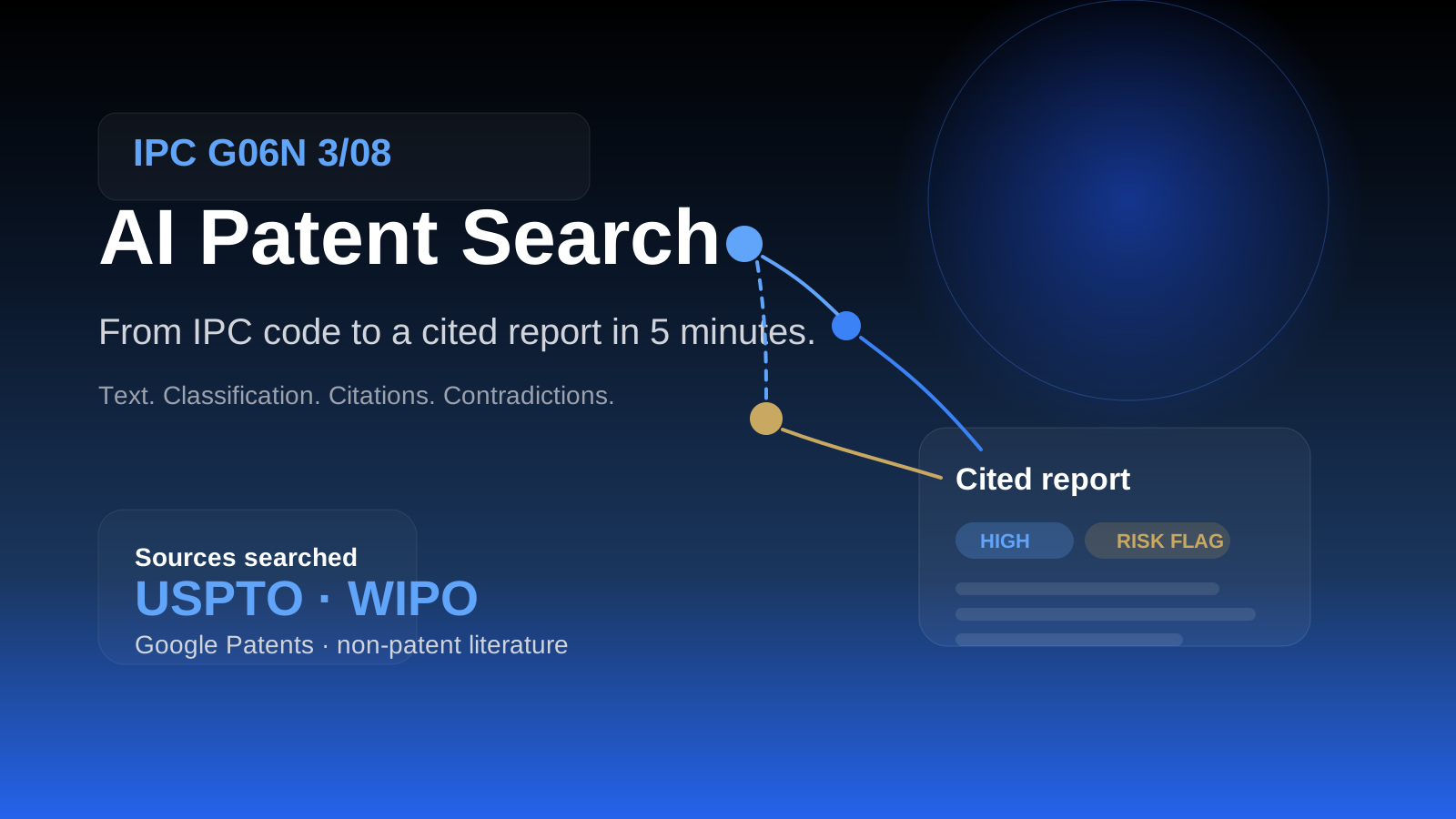
AI Patent Search: From IPC Code to Cited Report in 5 Minutes
Patent search is not one query. It is text, classification, citations, and non-patent literature across multiple databases. Here is the workflow that gets you from an IPC code to a cited report faster without pretending verification is optional.
Ready to try honest research?
Rabbit Hole shows you different perspectives, not false synthesis. See confidence ratings for every finding.
 Try free