

ChatGPT Deep Research vs Perplexity vs Rabbit Hole: Which One Cites Sources That Actually Exist?
If a deep research tool gives you a polished paragraph with one dead link or one unsupported claim, the report is already compromised. Here is the citation test that matters.
If a deep research tool gives you a polished paragraph with one dead link or one unsupported claim, the report is already compromised.
Short answer: Perplexity is easier to browse, ChatGPT Deep Research is easier to read, and Rabbit Hole is easier to audit when the stakes are high.
The winner is not the tool that sounds smartest. It is the tool that makes a bad citation hardest to miss.
Jump to the audit framework · Jump to the public benchmark · Try Rabbit Hole free
The most useful question is not whether ChatGPT Deep Research or Perplexity can produce an impressive-looking answer. Both can. The useful question is whether you can trust the citations after the first read.
That is the real divide in this category. Perplexity tends to show its sources sooner. ChatGPT Deep Research tends to produce a cleaner narrative. Rabbit Hole is slower, but its whole product shape is built around verification, visible confidence, and reusable research artifacts instead of a single polished wall of text.
The citation test
A citation test is brutally simple. Every source in the report has to clear three checks.
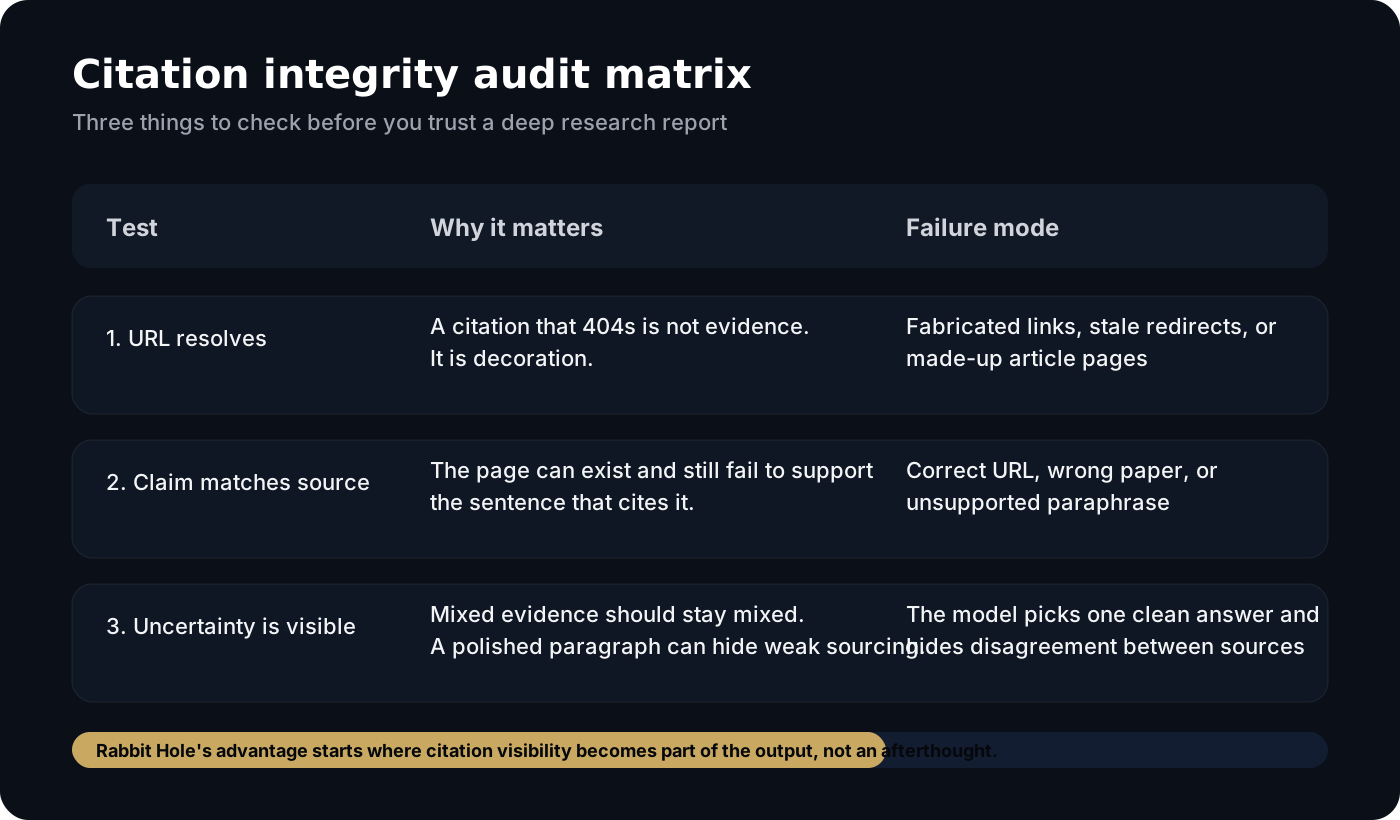
| Check | What you are asking | Why it matters |
|---|---|---|
| URL resolves | Does the link open to a real page or paper? | A 404 is not evidence. It is decoration. |
| Claim matches source | Does the cited page actually support the sentence that cites it? | A real URL can still be the wrong source. |
| Uncertainty stays visible | When sources disagree, does the tool preserve that disagreement? | The most dangerous failure mode is false confidence, not missing polish. |
This is also why the category is harder to evaluate than ordinary search. A traditional search engine sends you to the page. A deep research tool often rewrites the page for you, then hides the cost of being slightly wrong.
What the public benchmark already tells us
The cleanest published citation audit we have is the Tow Center for Digital Journalism benchmark from March 2025. The researchers gave eight search tools direct excerpts from real news articles, then asked each tool to identify the correct headline, publisher, publication date, and URL. Across 1,600 queries, the tools collectively answered more than 60 percent incorrectly. Perplexity was wrong 37 percent of the time. ChatGPT Search was wrong 67 percent of the time. The broader point matters more than the leaderboard: premium interfaces still fail at the citation layer, and they often fail with confidence.
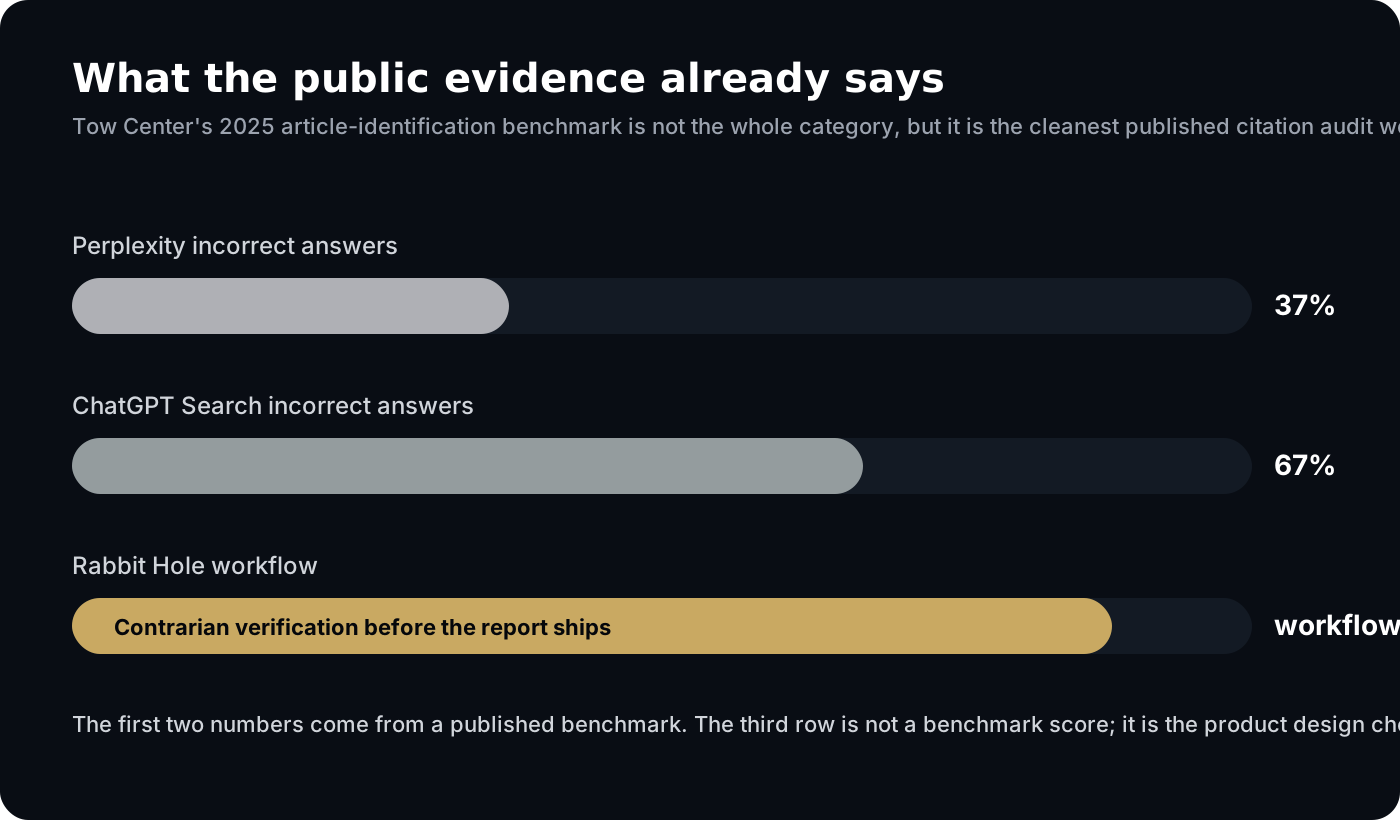
That benchmark is not a perfect substitute for a full deep research comparison. It is narrower than the kind of multi-source prompt a buyer would run in normal work. But it captures the part that matters most: whether a tool can point back to a source without breaking the chain of evidence. If it struggles there, you should be cautious about the polished long-form report built on top of it.
Relevant reading: Deep Research Tools Look Credible. That's the Problem., AI Research Citation Accuracy Problem, and How to Verify AI Research Output.
Perplexity: easiest to inspect quickly

Perplexity's advantage is not that it never gets citations wrong. The Tow numbers make clear that it does. Its advantage is that the interface keeps you closer to the source list. You can usually see the citations fast, open tabs fast, and decide within minutes whether the answer is worth trusting further.
That makes Perplexity good for:
- early exploration
- building a first-pass source map
- finding anchor documents before you switch into a more rigorous workflow
It breaks down when you need a report that survives scrutiny without manual follow-up. The citations are there, but the verification burden is still on you.
Pricing: Perplexity Pro starts at $20/month. Tow Center benchmark
ChatGPT Deep Research: strongest narrative, weaker auditability
ChatGPT Deep Research is compelling for a different reason. It turns a messy topic into a coherent brief faster than most people can do it themselves. If your standard is readability, it often feels stronger than Perplexity.
That same polish is also the risk.
OpenAI's own deep research materials acknowledge that the system can hallucinate facts, make incorrect inferences, and struggle to express uncertainty well. That matters because a clean narrative can hide citation weakness more effectively than a bullet list can. The reader stops auditing because the report already looks finished.
That makes ChatGPT Deep Research good for:
- first-pass synthesis
- briefing yourself before a meeting
- turning a broad topic into a readable memo draft
It breaks down when the evidence is mixed and the output needs to show that mixture explicitly instead of smoothing it over.
Pricing: ChatGPT Plus starts at $20/month and Pro at $200/month. OpenAI deep research announcement · OpenAI deep research system card
Rabbit Hole: slower, but designed for the part buyers actually care about
Rabbit Hole is not the fastest tool in this comparison, and it does not try to be. The point is not speed. The point is whether the output is something you can cite, reuse, and defend.
That product choice shows up in three places:
- Specialist research paths rather than one blended answer stream.
- Contrarian verification before the report reaches you.
- Structured deliverables with confidence signals, exportable artifacts, and source-aware formatting.
That makes Rabbit Hole the better fit when the output is heading into:
- an investment memo
- a diligence packet
- a technical landscape review
- a literature review where one weak citation poisons the whole document
If your work is more commercial than academic, the adjacent guide is Best AI Research Assistants for 2026. If it is more academic, start with AI Literature Review Tool. If the core problem is verification, read How to Verify AI Research Output.
Which one should you pick?
| If your actual need is... | Pick this tool | Why |
|---|---|---|
| Fast orientation on a topic | Perplexity | Lowest friction path to a usable first source map |
| A readable first-pass brief | ChatGPT Deep Research | Strongest narrative shape when you still plan to verify manually |
| A report other people will challenge | Rabbit Hole | Best fit for confidence-aware output and citation scrutiny |
| Mixed-evidence research where one bad citation is expensive | Rabbit Hole, then manual spot-checking | Verification belongs inside the workflow, not after it |
A polished report is not the same thing as a trustworthy one. In this category, the real moat is not fluency. It is how visible the source weaknesses remain after the answer is written.
The practical verdict
If you want the fastest path to a starting point, use Perplexity.
If you want the cleanest narrative first draft, use ChatGPT Deep Research.
If you want the best chance of catching bad citations before they reach your memo, your partner meeting, or your literature review, use Rabbit Hole.
That is the citation test that matters.
If you want to pressure-test your own workflow next, read Perplexity Alternative: Why Researchers Switch to Multi-Agent Research for Deep Analysis and ChatGPT Deep Research Review (2026): When It Works and the Best Alternative for High-Stakes Research.
Try Rabbit Hole free on Rush, the macOS agent platform.
Related Articles
The 2026 Buyer's Guide to AI-Powered Research Assistants
The best ai-powered research assistant in 2026 depends on whether you need a fast answer, a literature workflow, or a report you can actually defend after the meeting.
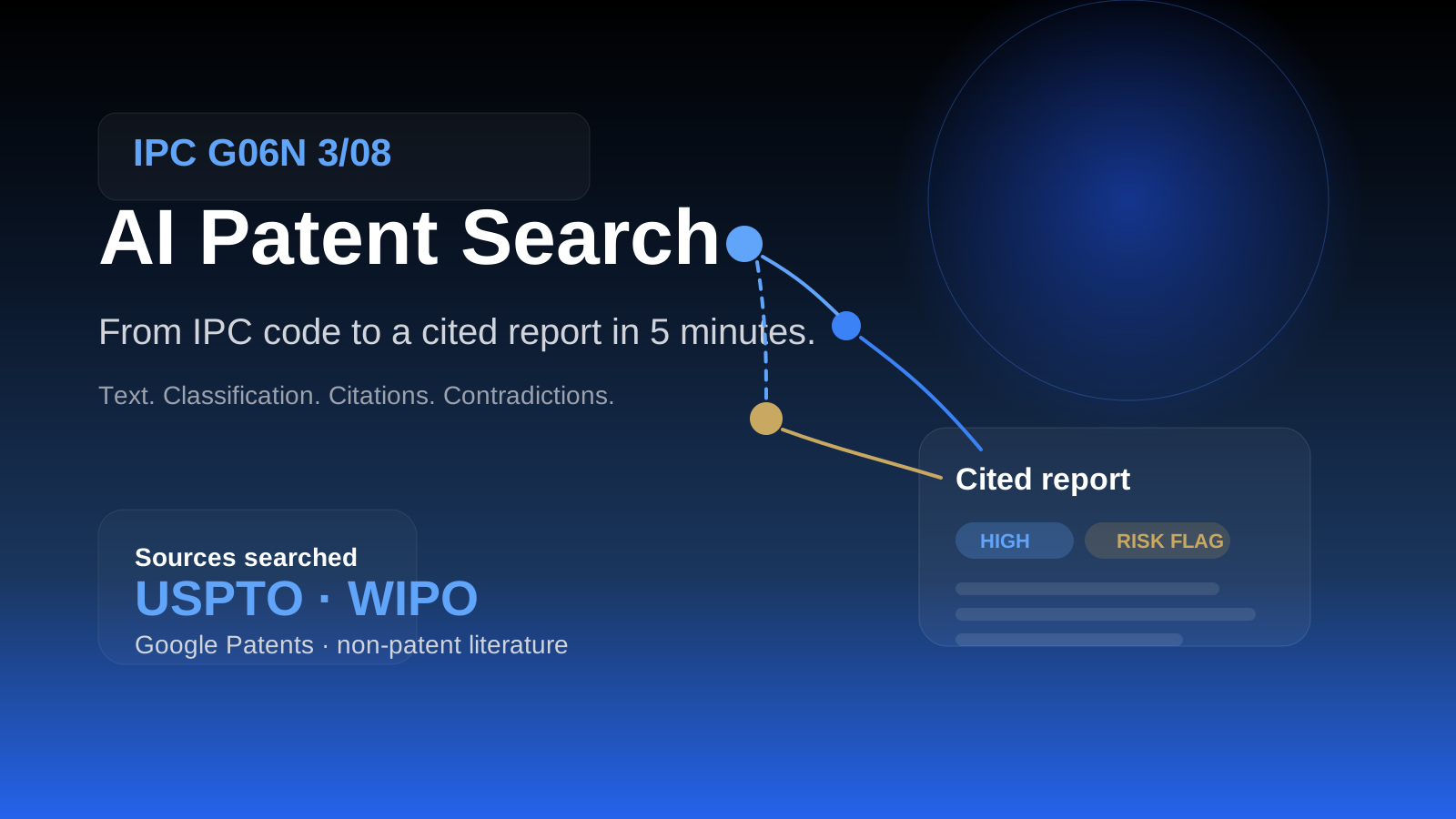
AI Patent Search: From IPC Code to Cited Report in 5 Minutes
Patent search is not one query. It is text, classification, citations, and non-patent literature across multiple databases. Here is the workflow that gets you from an IPC code to a cited report faster without pretending verification is optional.
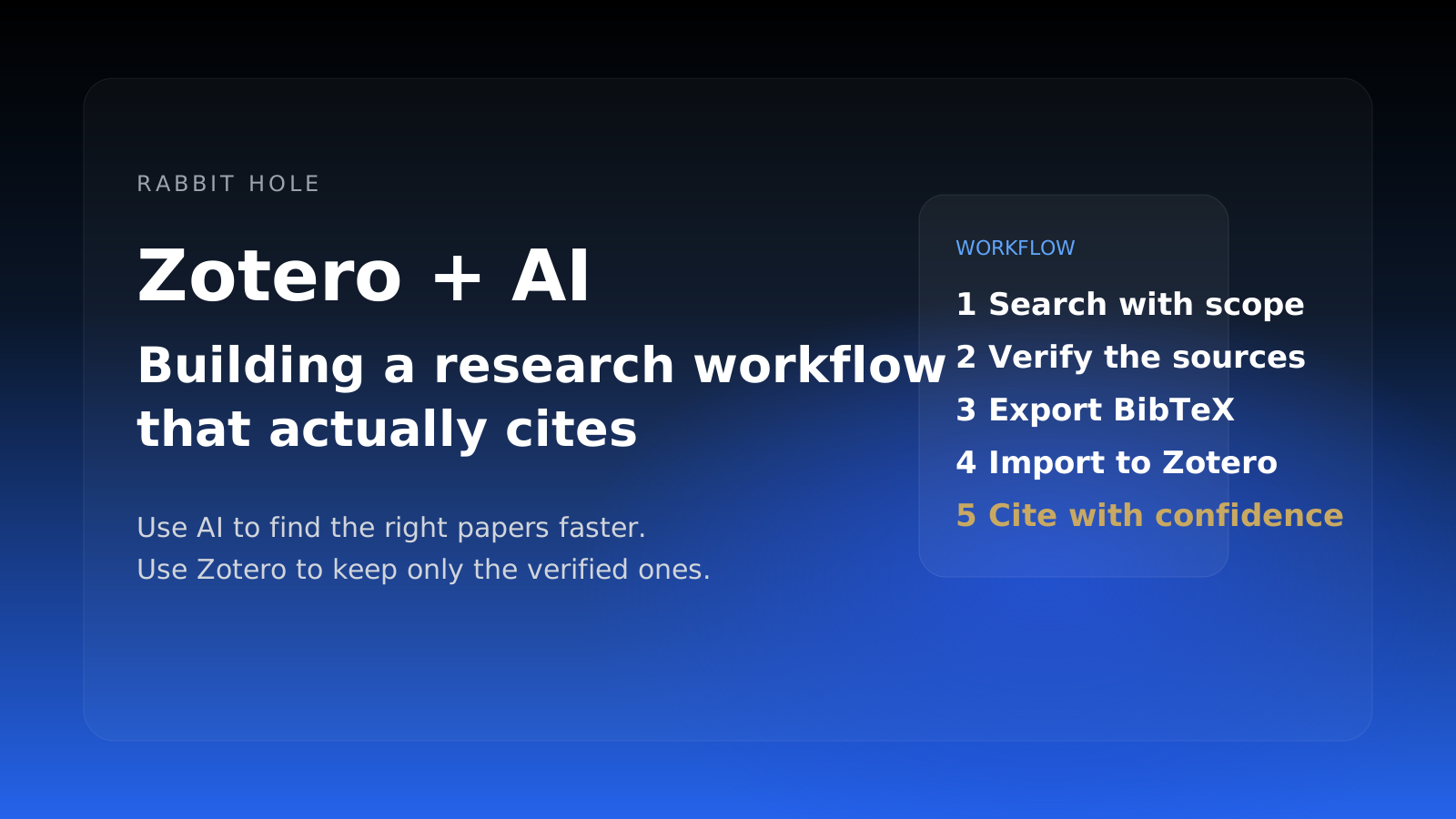
Zotero + AI: Building a Research Workflow That Actually Cites
Zotero already solves storage and citations. The missing layer is faster discovery with verification before weak sources make it into your library.
Ready to try honest research?
Rabbit Hole shows you different perspectives, not false synthesis. See confidence ratings for every finding.
 Try free