
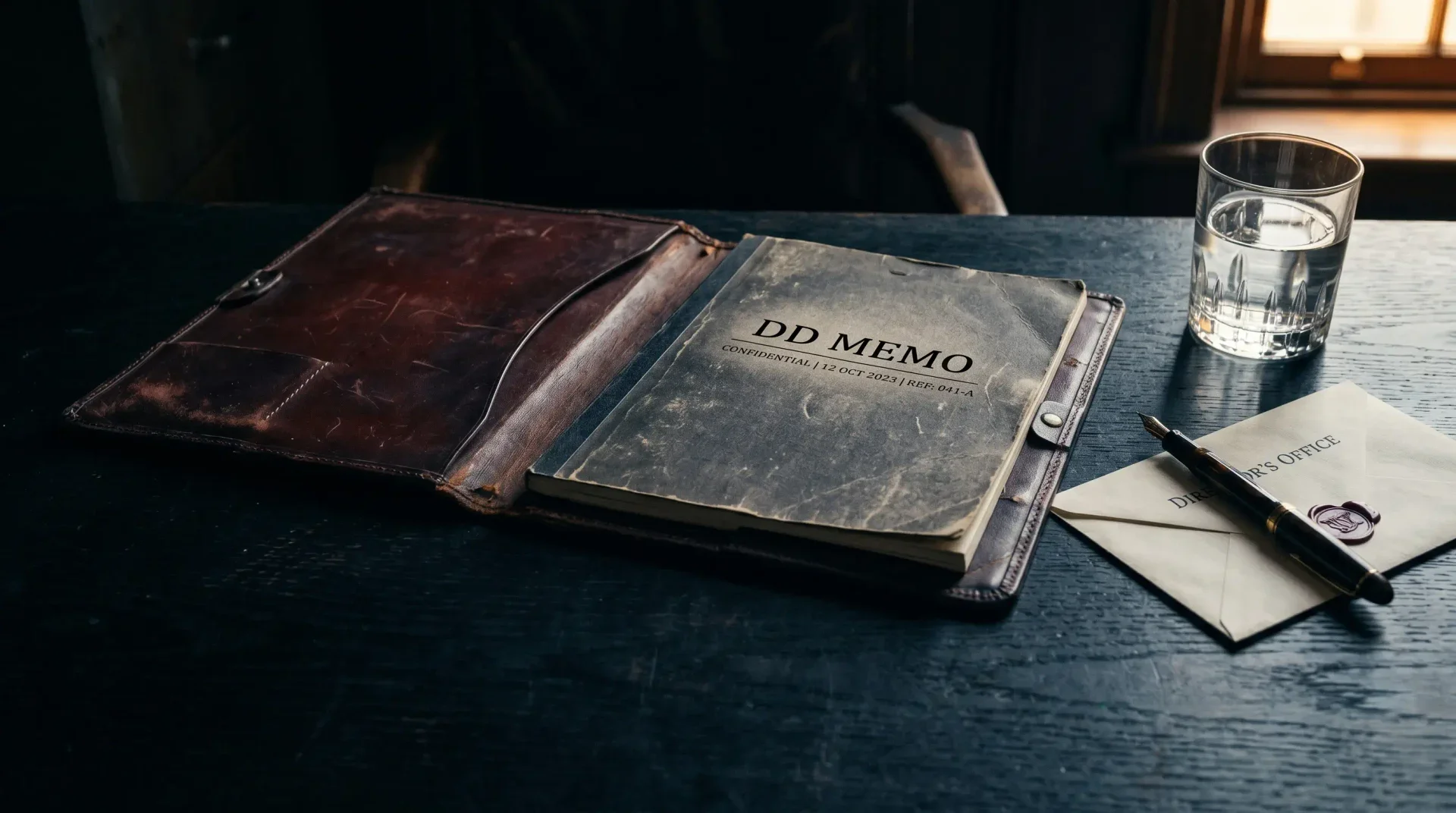
AI Due Diligence: How to Verify a Company Before the Meeting
AI due diligence works when it separates source collection, contradiction checks, and evidence grading before you walk into an investment or partnership meeting.
AI due diligence works when it turns a polished story into a checkable set of claims before the meeting. If you are evaluating a startup, vendor, acquisition target, or strategic partner, the job is not to collect more data. The job is to verify what is true, flag what is uncertain, and walk into the room knowing which claims can survive questions.
Quick answer: The best AI due diligence workflow separates evidence collection, contradiction checks, and confidence grading. If the tool cannot show what source supports a claim, where the evidence conflicts, and what still needs manual follow-up, it is helping you write a memo—not do diligence.
A usable diligence memo is not just a summary. It tells you what is verified, what conflicts, and what still needs work.
AI due diligence is not about generating a prettier memo. It is about reducing the number of bad decisions you make from incomplete, conflicting, or polished information.
Most diligence workflows still fail in the same place: they confuse speed with confidence. A deck looks polished. A founder sounds credible. A market category sounds hot. Then the real questions show up: Does the team have evidence of execution? Are customers actually happy? Is the market large enough? Is the product differentiated or just well narrated? Traditional diligence spreads those answers across dozens of tabs and half-finished notes. AI due diligence should do the opposite. It should compress the mess into a report you can challenge.
AI due diligence checklist: what to verify before the meeting
Before you trust any AI due diligence output, pressure-test it against this simple checklist:
| Diligence question | What to check | What weak output looks like |
|---|---|---|
| Is the evidence real? | Can every important claim be traced back to a source you can open? | A polished summary with no citations or vague source labels |
| Does the memo preserve contradiction? | Does it show where reviews, docs, filings, and founder claims disagree? | One smooth narrative that hides disagreement |
| Is confidence graded? | Are claims marked as strong, moderate, or weak based on evidence quality? | Everything presented with the same tone of certainty |
| What still needs a human? | Are unresolved questions listed clearly before the meeting? | A memo that pretends the research is complete |
That checklist is the difference between a useful diligence aid and research theater. If you want a broader workflow for fast investor research, The VC Research Workflow shows how parallel search changes the pace of company analysis.
AI due diligence: a 2-minute red-flag scan
Before you get impressed by a polished memo, scan for the failure patterns that usually hide weak diligence:
| If the memo shows... | It usually means... | What to do next |
|---|---|---|
| A single smooth narrative with no disagreement | The workflow flattened conflicting evidence instead of preserving it | Ask which claims had contradictory sources and where they went |
| No direct links to customer reviews, filings, docs, or public records | You are looking at synthesis without a way to audit the evidence | Open the sources before trusting the takeaways |
| Every claim carries the same confident tone | The tool is hiding weak evidence behind fluent writing | Force a strong / moderate / weak confidence pass |
| No unresolved questions before the meeting | The memo is pretending the diligence is finished | Create a manual follow-up list before the call |
That quick scan matters because most diligence failures are not caused by missing words. They are caused by hidden uncertainty, missing source access, and summaries that sound more complete than they are.
What AI due diligence should actually do
A useful AI due diligence workflow has four jobs:
- Collect evidence from multiple source types at once. That means company pages, customer reviews, technical docs, news coverage, SEC filings, community discussion, and hiring signals.
- Separate facts from interpretation. Revenue claims, product launches, patent filings, and headcount trends are not the same as customer sentiment or analyst opinion.
- Surface contradictions early. If customer reviews say implementation is painful while the homepage promises a one-day rollout, that mismatch matters.
- Grade confidence. A claim backed by a filing and two independent reports deserves more weight than a single podcast quote or founder tweet.
That last point is the part most AI tooling skips. It gives you a summary without telling you which parts of the summary deserve trust. In diligence, that is dangerous. The whole point is to know where the evidence is strong and where it is thin.
The best AI due diligence process starts with questions, not prompts
Bad diligence prompts ask for a company overview. Good diligence prompts ask for decision support.
Instead of: Research this startup.
Use something closer to:
Evaluate this company for investment or partnership diligence. Check team credibility, market quality, customer proof, product differentiation, obvious risks, and unresolved questions. Separate high-confidence findings from weak signals. Return a memo I can challenge in a meeting.
That structure changes the output. It forces the system to investigate the company as a set of decision-critical claims instead of generating generic background.
AI due diligence for team credibility
The first use of AI due diligence is verifying whether the people behind the company can actually execute.
This means checking more than bios. You want to compare LinkedIn claims against public execution signals: prior shipped products, GitHub activity, technical writing, previous exits, legal history, and whether the team has operated in this market before. A founder who says they are “building the future of compliance automation” is less interesting than a founder who previously sold workflow software to risk teams and hired a head of policy last month.
AI helps by pulling those threads in parallel. Instead of manually bouncing between LinkedIn, company pages, archived bios, GitHub, and press coverage, you can ask for a single credibility section with evidence attached. The output should tell you not just who the founders say they are, but what the public record supports.
AI due diligence for customer proof and market signal
The second use of AI due diligence is testing whether the market actually validates the story.
This is where source diversity matters. Customer proof is rarely found in one perfect place. You may need to combine review sites, implementation complaints, case studies, Reddit threads, job postings, and partner announcements. Together, these form a better picture than any single testimonial. If the question is more category-level than company-level, the adjacent AI Market Research Tool workflow is the better way to pressure-test demand, pricing, and positioning before you walk into a diligence call.
A strong diligence workflow looks for questions like:
- Are customers praising the same thing the company markets?
- Do reviews reveal a recurring weakness in onboarding, support, or pricing?
- Are partners treating the company like a serious platform or a lightweight integration?
- Is hiring consistent with growth, or does it signal a strategic scramble?
These are exactly the questions where a single-chat answer tends to flatten nuance. AI due diligence works best when it preserves disagreement. If public sentiment is split, the report should say so. If the market is promising but crowded, the report should say so. The point is not to sound decisive. The point is to make a better decision.
AI due diligence for product differentiation
Product diligence usually gets reduced to feature comparison, which misses the real question: why does this company win when alternatives exist?
An AI due diligence workflow should compare positioning, product claims, developer documentation, pricing, implementation friction, and user complaints side by side. That lets you test whether the moat is product depth, workflow integration, team expertise, distribution, or just good storytelling.
One practical way to do this is to ask for a short competitor grid with three columns:
| Area | What to verify | Why it matters |
|---|---|---|
| Product | Core claims, implementation complexity, missing capabilities | Reveals whether the product advantage is real or superficial |
| Market | Category growth, buying urgency, crowded competitors | Shows whether demand is real enough to matter |
| Execution | Team background, hiring, shipping cadence, customer trust | Tells you whether this team can turn a story into a company |
That grid is simple, but it forces the research into a shape that a partner, buyer, or operator can actually use.
What the output should look like
Good AI due diligence output is not a wall of prose. It is a memo with sections, citations, and explicit uncertainty.
At minimum, the report should give you:
- Thesis: what looks promising and what deserves skepticism
- Evidence by section: team, market, product, customer proof, and risks
- Confidence labels: strong evidence, moderate evidence, weak evidence
- Contradictions: where public signals disagree
- Open questions: what still requires manual follow-up
That last section matters more than most people admit. A diligence memo that claims completeness is usually lying. The best memo tells you what it could not verify.
If you want to pressure-test the evidence quality itself, read How to Verify AI Research Output and Deep Research Tools Look Credible. That’s the Problem.. If you want the broader comparison set, Best AI Research Assistants for 2026 breaks down where generic deep-research tools still fall short. If your diligence touches regulated or sanction-sensitive work, the stricter adjacent pattern is AI legal research, where verification and confidentiality rules are tighter than ordinary market research.
AI due diligence FAQ
What is AI due diligence?
AI due diligence is the use of AI-assisted research workflows to evaluate a company, vendor, acquisition target, or market by gathering evidence, surfacing contradictions, and grading confidence before a decision meeting.
Is AI due diligence reliable enough for investment decisions?
AI due diligence is reliable when it is used to accelerate evidence gathering and synthesis, not replace judgment. You still need source checks, contradiction review, and manual follow-up on high-stakes claims.
What should an AI due diligence memo include?
A strong AI due diligence memo includes a thesis, evidence by section, citations, confidence labels, contradictions, and a short list of unresolved questions for human follow-up.
What are the biggest risks of AI due diligence?
The biggest risks are false confidence, hidden source quality problems, and summaries that flatten disagreement. If the workflow cannot show where a claim came from or how strong the evidence is, it should not drive the decision.
Sources
- McKinsey: The state of AI in early 2025 — evidence that organizations are increasing AI use in strategy and operations, which raises the cost of weak diligence and unchecked confidence.
- PwC: 28th Annual Global CEO Survey — evidence on how CEOs are using AI in investment and planning decisions while still reporting trust and execution gaps.
- Gartner: Use Critical Thinking to Interpret Generative AI Output — framework support for treating AI output as draft analysis that still needs source validation and contradiction review.
Why Rabbit Hole fits the AI due diligence workflow
Rabbit Hole is useful for AI due diligence because it treats diligence as a multi-source research problem, not a single-model summary problem. It searches different source types in parallel, preserves where evidence conflicts, and returns a report with confidence ratings instead of a single confident voice.
That matters when the cost of being wrong is high. In a diligence meeting, you do not need more fluency. You need stronger evidence, better synthesis, and a shorter path from raw information to a memo you can defend.
If that is the kind of research you need, try Rabbit Hole. It is built for high-stakes research where citations, contradictions, and confidence matter more than a fast answer.
Related Articles
The 2026 Buyer's Guide to AI-Powered Research Assistants
The best ai-powered research assistant in 2026 depends on whether you need a fast answer, a literature workflow, or a report you can actually defend after the meeting.
ChatGPT Deep Research vs Perplexity vs Rabbit Hole: Which One Cites Sources That Actually Exist?
If a deep research tool gives you a polished paragraph with one dead link or one unsupported claim, the report is already compromised. Here is the citation test that matters.
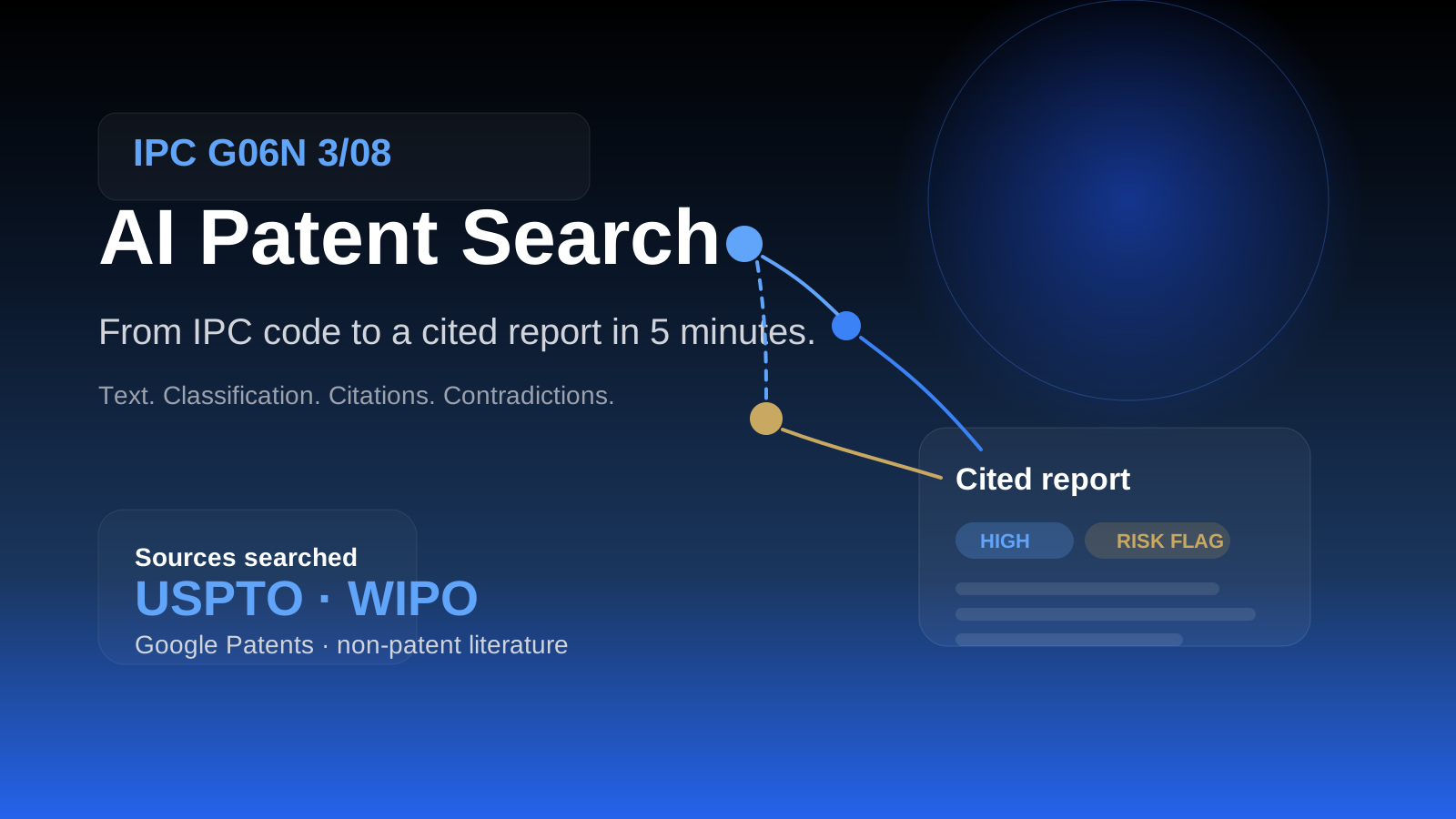
AI Patent Search: From IPC Code to Cited Report in 5 Minutes
Patent search is not one query. It is text, classification, citations, and non-patent literature across multiple databases. Here is the workflow that gets you from an IPC code to a cited report faster without pretending verification is optional.
Ready to try honest research?
Rabbit Hole shows you different perspectives, not false synthesis. See confidence ratings for every finding.
 Try free